
MENA startup funding surges to $1.1 billion in September 2026
MENA startup funding staged a sharp comeback in September, crossing the $1 billion mark for the first time in months as a string of large Saudi fintech deals pulled the region out of August’s slowdown.
Startups across the Middle East and North Africa raised $1.1 billion through 73 deals during the month, up 193% from August. Yet the recovery looks less dramatic when compared with last year: funding remained 68% below September 2025.
The rebound was also highly concentrated.
Barq’s $329.5 million Series A, Tabby’s $233 million Series F and Lendo’s $200 million debt financing together brought in $762.5 million, accounting for nearly 70% of all capital raised during the month.
That concentration offers a more nuanced picture of September. Capital returned in force, but it flowed disproportionately to a handful of large, predominantly Saudi fintech companies rather than evenly across the ecosystem.
Debt also remained a significant feature of the funding landscape, accounting for 31.7% of September’s total. That is substantially lower than the 76% recorded in September 2025, suggesting equity played a much larger role in this year’s headline figure.
Saudi Arabia takes back the lead
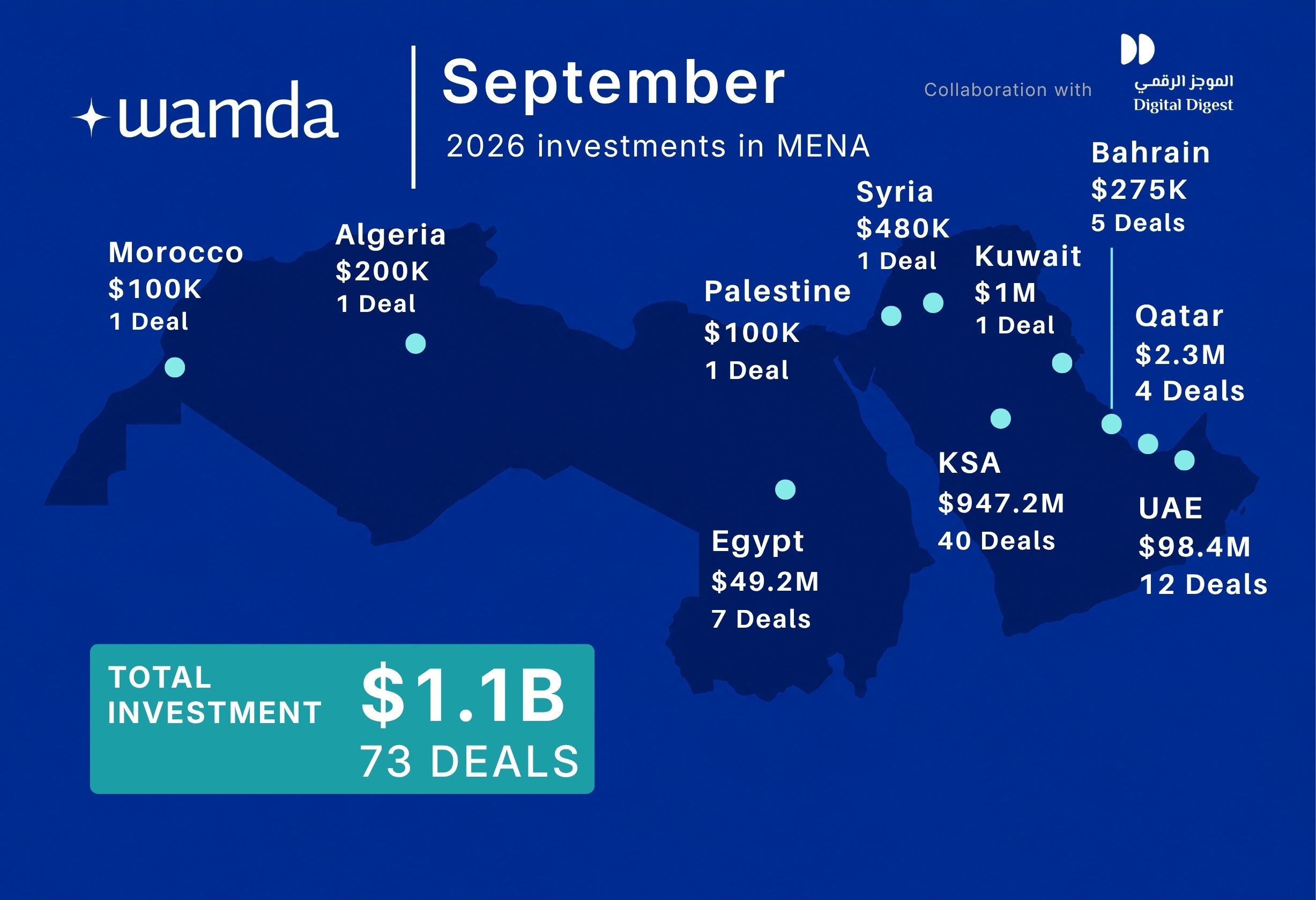
Saudi Arabia returned to the top of the regional funding table in September, with 40 startups raising a combined $947.2 million.
The kingdom alone accounted for roughly 86% of all capital raised in MENA during the month, underlining just how heavily September’s performance rested on the Saudi market.
Fintech was the clear driver. The sector accounted for 86% of Saudi Arabia’s funding, buoyed by the large rounds raised by Barq, Tabby and Lendo.
The UAE, which led the region in August, slipped to second place with $98.4 million raised across 12 deals.
Five of those companies were fintech startups, and together they accounted for 71% of the UAE’s total funding, showing that the sector’s dominance was not confined to Saudi Arabia.
Egypt, meanwhile, returned to the regional top three after recording no funding in August.
Seven Egyptian startups raised $49.2 million, although here too the total was shaped by one standout transaction. Paymob’s $35 million pre-Series C round accounted for about 71% of the country’s funding for the month.
Further down the table, Qatar moved into fourth place with four deals worth a combined $2.4 million, followed by Kuwait, where COFE recorded an estimated $1 million transaction.
Startups in Syria and Palestine raised a combined $580,000 across two deals, while Bahrain recorded five transactions worth $275,000.
Fintech is back in command
After losing some of its momentum in previous months, fintech returned decisively to the top of the sector rankings.
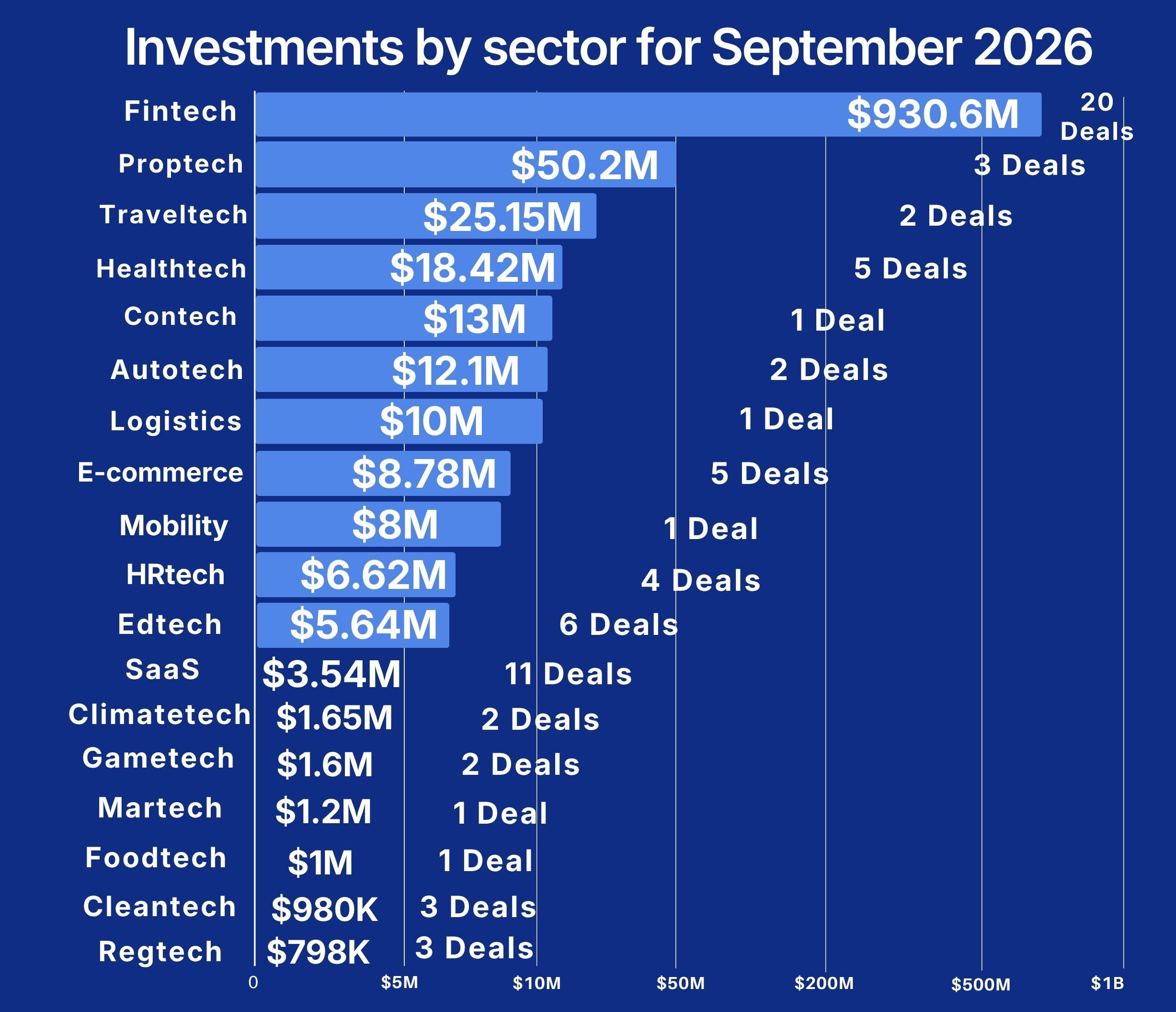
Twenty fintech startups raised $930.6 million in September, equivalent to around 85% of all funding deployed across MENA.
But, as with the regional total, much of that figure came from a small number of companies. Barq, Tabby and Lendo accounted for around 82% of all fintech funding during the month.
That makes September as much a story about deal size as sector strength. Fintech clearly remained the region’s most capital-intensive vertical, but its performance was amplified by three unusually large transactions.
Proptech came a distant second with $50.2 million raised across three deals. Rize’s $50 million round accounted for virtually all of that total.
Traveltech ranked third, attracting $25.2 million across two deals.
Later-stage deals make a comeback
September also brought some relief at the later end of the funding spectrum.
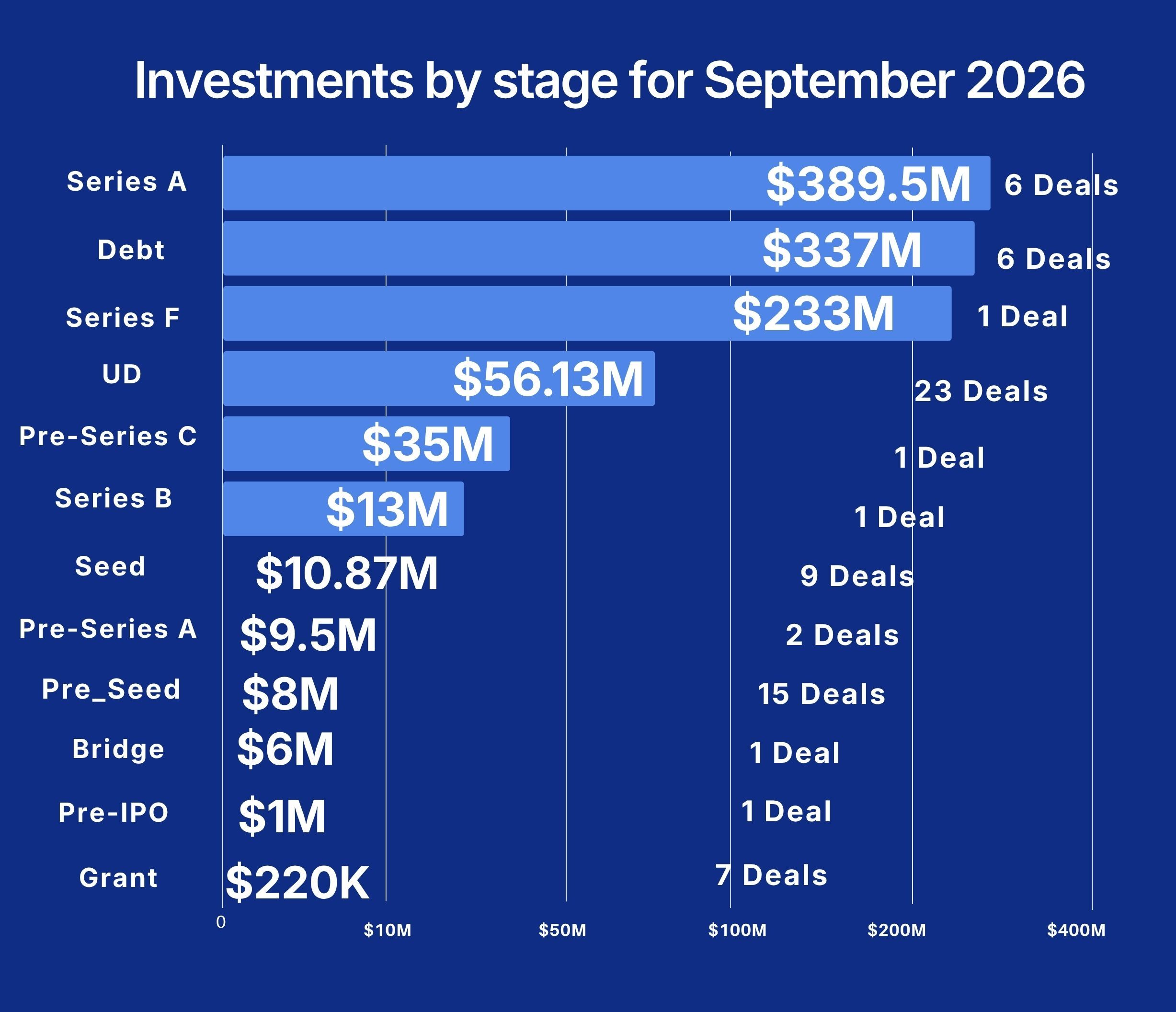
Five later-stage startups raised a combined $288 million during the month, a notable return of larger equity rounds after a period in which investors had largely favoured smaller and earlier-stage bets.
Early-stage companies nevertheless remained the dominant funding category in September, leading both by deal count and capital raised, with $418.2 million secured across 39 transactions.
Another 23 startups did not disclose the stage of their rounds, while six transactions were classified as debt deals.
The split suggests investors have not abandoned early-stage companies, but larger companies are once again finding ways to secure sizeable pools of capital, an encouraging signal after a year marked by tighter funding conditions.
B2B continues to attract the most deals
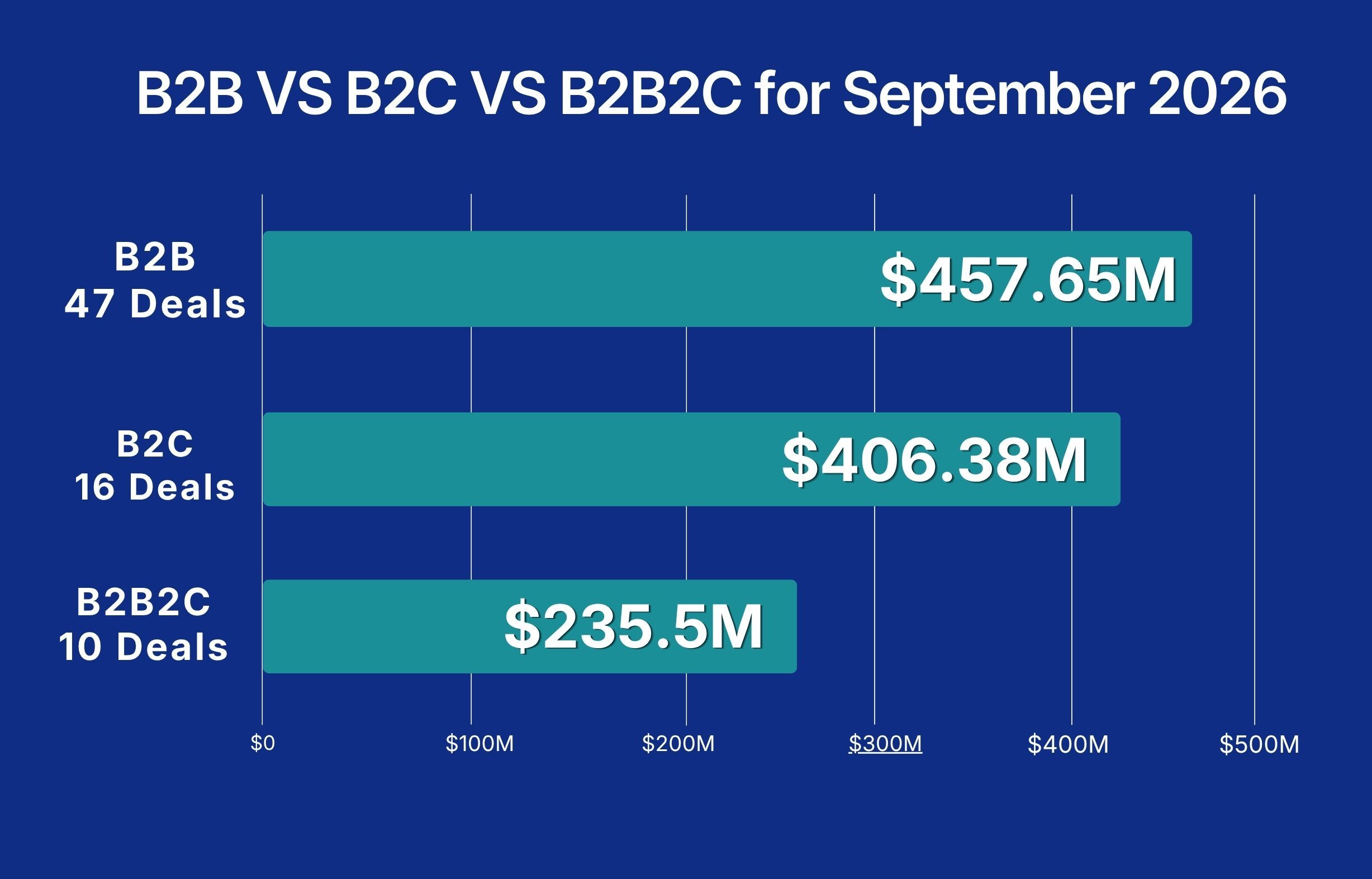
Business-to-business startups remained the most active segment of the market, raising $457.7 million across 47 transactions.
Consumer-focused companies attracted $406.4 million across 16 deals, while the remaining capital went to startups operating across both B2B and B2C models.
The figures reinforce a trend that has been visible throughout much of the year: investors continue to favour companies selling to businesses, particularly those with clearer paths to recurring revenue and enterprise-scale growth.
Female founders remain severely underfunded
One imbalance showed little sign of improving.
Male-led startups received around $1 billion in September, dwarfing the $2.4 million raised by female-founded companies.
Startups with mixed-gender founding teams attracted another $7.3 million.
The disparity is difficult to overlook. Even in a month when regional funding topped $1 billion, only a fraction of that capital reached companies founded or co-founded by women.
September’s rebound, in other words, did little to narrow one of the ecosystem’s most persistent funding gaps.
A strong headline, but not yet a broad recovery
September gave the MENA ecosystem one of its strongest monthly funding totals of the year and pushed third-quarter investment above $1.7 billion.
But the composition of that funding matters as much as the total.
Three transactions accounted for almost 70% of September’s capital, one country absorbed about 86% of the region’s funding, and one sector captured roughly 85%.
Strip away those mega-deals, and the picture becomes considerably more modest.
That does not make September’s rebound insignificant. The ability of regional startups to close transactions worth hundreds of millions of dollars — across equity and debt — shows that investors are still willing to make large commitments when they see the right companies and opportunities.
What September does not yet show is a broad-based return of capital across the ecosystem.
That will be the more important test in the fourth quarter: whether the momentum created by a few outsized transactions begins to spread across more countries, sectors and funding stages, or whether MENA’s funding recovery remains dependent on a narrow group of heavyweight deals.
Wamda’s upcoming Q3 report will examine how those dynamics shaped the region’s venture funding landscape over the quarter.
These monthly reports are a collaboration between Wamda and Digital Digest.