
What stood out at LEAP 2026
An article by Abdullah Al Jaafari, CEO and Founder of Resquad AI
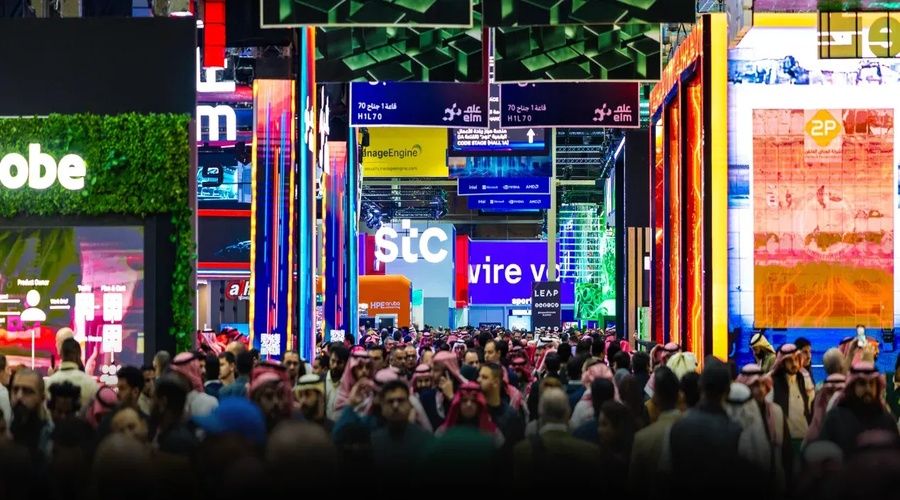
Somewhere on the second day in Riyadh, I stopped photographing the robots and started noticing the lanyards.
LEAP 2026 has a badge tier that sits above VIP. It is called VVIP. Two Vs. I kept seeing it in the corridors of the Riyadh Exhibition and Convention Center, and that small piece of plastic explained the week better than any keynote.
When even VIP status gets segmented, the top of the market has outgrown its own categories. This edition brought together 1,289 investors from 1,016 firms representing $14.5 trillion in assets under management. When that much capital turns up in person, somebody has to invent a room above the VIP room.
Before LEAP, I wrote in this column that I would watch the event through four filters: infrastructure, agentic AI, Arabic-first products and talent. I wanted to judge the week not by how much was announced, but by what those announcements might actually produce.
Four days of LEAP later, here is my scorecard.
One thing needed no filter at all. AI stopped being a topic at LEAP and became the air.
Health, energy, cities, gaming, logistics — every stage seemed to become an AI stage. Electricity made a similar journey a century ago: first an industry in its own right, then an assumption embedded inside every other industry. At LEAP 2026, AI appeared to cross something close to that line. It is no longer simply a track at the event. Increasingly, it is what every track runs on.
The first filter, infrastructure, delivered the clearest shift of the week: the MoU era is giving way to the commissioning era.
Day one brought more than $15 billion in technology launches, investments and partnerships, according to the Saudi Press Agency. But the announcements that mattered most were not simply pledges. They came with infrastructure already operating or firm delivery dates.
AMD, Cisco and HUMAIN announced that production AI infrastructure powered by AMD Instinct GPUs is now live in Saudi Arabia and serving customers. The companies also plan a much larger expansion, with up to 250 megawatts of additional AI infrastructure beginning in 2027.
AWS confirmed that its first Saudi cloud region will open in December as part of a planned investment of more than $5.3 billion. Microsoft’s Saudi Arabia East data centre region goes live in November. And the HUMAIN AI PC, running Microsoft Windows, is scheduled to become available to enterprise customers on Sept. 20.
Local cloud regions. Local compute. Locally deployed AI hardware.
Sovereign AI got physical this week.
Delivery dates were the real status symbol of this LEAP, and I mean that as a compliment.
Behind many of those dates stands the same actor, and this is the part I most want visitors from other regions to understand.
In many markets, the state’s role in technology is primarily to regulate, procure and occasionally subsidize it. In Saudi Arabia, the government is playing a much broader role: convening companies, directing capital, supporting infrastructure and acting as a major customer.
The more than $15 billion announced on LEAP’s opening day was not occurring in isolation. It sits inside a national technology strategy being executed in public. HUMAIN, a company owned by the Public Investment Fund, was at the centre of many of the week’s major announcements.
Then there is government itself as a technology user.
During LEAP, 62 government entities were recognised for completing the integration of 926 government services into Tawakkalna. The platform has more than 36 million users and handles more than 85 million transactions a day.
I have rarely seen a government this proactive about the technology industry it hosts. Elsewhere, the state often referees the game. Here, it also plays.
The second filter was agentic AI.
My prediction before LEAP was that agents would move from the demo stage to the purchase order — that companies would stop watching them perform and start buying them.
Reality moved in a slightly different direction. Agents began arriving inside software companies already use.
HUMAIN and Microsoft plan to offer HUMAIN ONE alongside Microsoft 365, including Copilot, as an AI productivity bundle for enterprise customers, initially targeting 1 million users across the Middle East and Africa.
That matters because adoption changes when AI becomes part of an existing enterprise workflow rather than another standalone pilot. The distance between experimentation and everyday use becomes much shorter.
And agents grew wheels.
HUMAIN and Applied Intuition announced plans to deploy thousands of autonomous trucks across Saudi logistics corridors by 2030, laying the groundwork for what the companies say would become the world’s largest autonomous trucking network.
The agentic idea is moving beyond office software and into physical systems. One version helps employees navigate enterprise data and workflows. Another will move freight down a highway.
The third filter, Arabic-first products, also moved from aspiration toward deployment.
HUMAIN’s ALLAM Arabic-language model is set to become available through Amazon Bedrock, bringing Arabic-language AI capabilities into one of the world’s major enterprise generative AI platforms.
Adobe, meanwhile, became the first global software company to move AI workloads onto HUMAIN’s infrastructure, migrating regional AI data-captioning workloads to locally hosted infrastructure inside Saudi Arabia.
That distinction matters.
Data residency is no longer being treated only as a compliance requirement. Increasingly, it is part of the product proposition.
HPE offered another version of the same argument with its “Saudi Made, Developed, Deployed” initiative, which connects locally produced infrastructure with Saudi-developed software, implementation and support.
The direction is clear: the conversation is shifting from importing technology to building more of the stack — infrastructure, applications, skills and delivery capability — inside the Kingdom.
And then there was the fourth filter, the one I called the hardest.
Talent.
Before the event, I wrote that talent is the one thing no keynote can announce.
No keynote did.
Nobody stood on the main stage and unveiled 10,000 senior engineers, because engineers cannot be unveiled. They have to be developed, recruited, challenged and retained. That takes years in a way no procurement cycle can compress.
What did change was the language around the gap.
AWS brought a free AI Training Academy to LEAP, pairing infrastructure announcements with skills development. Across the event, training and developer enablement increasingly appeared alongside conversations about cloud capacity and compute.
And on the exhibition floor, at our stand in Hall 5, I watched the same conversation repeat for four days: It began with infrastructure and ended with people.
Nobody asked us where to find GPUs.
Everyone asked where to find engineers who ship.
You still cannot sign an MoU that brings an engineer into existence. Compute capacity can be purchased quickly. A deep pool of builders cannot.
Talent is the last mile of sovereignty.
So this is my scorecard.
Sovereignty now has delivery dates: production AI infrastructure live today, an AI PC on Sept. 20, a Microsoft cloud region in November and an AWS region in December.
The line on the roadmap that still resists a neat delivery date is people — and it is the line every other date ultimately depends on.
And yet, the most hopeful thing I saw at LEAP was not on any stage.
It was the students.
The halls were full of them: young, curious, watching some of the biggest technology companies in the world compete for space in their home market.
You could almost see the conclusion forming without anyone having to explain it to them: This is the world they are going to work in, and it needs them.
No keynote can announce builders. But an event can show 19-year-olds what is being built around them and let ambition do the rest.
Of everything I saw that week, that made me most optimistic.
Which brings me back to the badge.
The VVIP tier tells you the capital has arrived. The delivery dates tell you the infrastructure is arriving, too.
What I want from LEAP 2027 is the third act: a headline number measured not in megawatts or billions, but in builders — developed at the same ambition and scale now being applied to data centers.
The day a keynote can credibly announce that kind of progress, Saudi Arabia will have moved much closer to the sovereignty everyone spent this LEAP talking about.
That is a session I would queue for.
Even without a VVIP badge.