
At Family Office Summit Dubai, governance and AI redefine wealth strategy
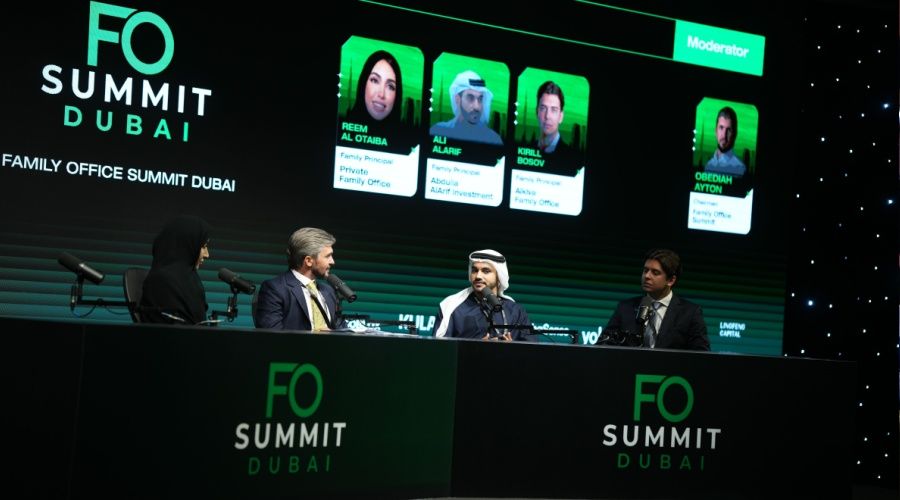
As global volatility reshapes capital markets and artificial intelligence redraws competitive advantage, family offices are quietly reengineering how they deploy money, structure governance and diversify risk. That shift was evident at the Family Office Summit Dubai, which convened 254 participants, including 81 family offices and 103 family holdings, against the backdrop of an ecosystem managing more than $1.2 trillion in assets.
The discussions were not theoretical. They centred on execution: how to institutionalise family capital, deepen exposure to private markets, integrate AI into operations and expand into Asia without compromising governance. What emerged was a clear message — long-term wealth today demands structure, speed and global reach.
Dubai’s growing gravity in global wealth
The backdrop matters.
Dubai today sits at the centre of an ecosystem managing over $1.2 trillion in assets through local family offices and affiliated structures. That scale reinforces the emirate’s transformation from a regional financial centre into a global convening point for private capital.
Participation at the summit reflected that international pull. Delegates arrived from across the Middle East, Europe, Asia, Hong Kong and North America. The structure of the event itself, featuring 12 expert-led panels and 10 curated roundtables, signalled a deliberate shift toward substance over spectacle.
Obediah Ayton, Chairman of the Family Office Summit, captured the tone succinctly. The discussions, he said, reflected a “disciplined, forward-looking approach to wealth management", as families redefine capital allocation and governance in a rapidly evolving landscape.
In other words, this was not about trend-chasing. It was about structural adjustment.
Governance first: Separating business from wealth
If there was one foundational theme, it was governance.
The opening panel tackled a common fault line within wealthy families: the blurred boundary between operating businesses and family wealth. Experts emphasised the importance of separating the two through formal holding structures, trusts and clearly defined investment frameworks.
The objective is straightforward. Reduce emotional decision-making. Simplify complexity. Preserve alignment across generations.
This shift reflects a broader institutionalisation of family capital in the Gulf. Families are increasingly adopting frameworks that mirror those of sovereign funds and institutional investors. The transition from entrepreneurial instinct to structured allocation is well underway.
And governance, participants agreed, is the anchor.
Private markets take centre stage
With governance established as the foundation, attention turned to deployment.
Private markets dominated the investment conversation. UAE-based family offices are expanding into co-investments, direct deals, secondaries, club deals and private credit as part of diversified private equity strategies.
The numbers support the narrative. During the first half of 2025, UAE family offices drove nearly $3 billion in venture capital deals. This is not passive capital. It is active, directional and increasingly global.
At the same time, Dubai’s financial infrastructure continues to deepen. The emirate recorded a nearly 40% rise in new asset and wealth management registrations in 2025, reinforcing its appeal as a base for structured capital activity.
The message was consistent: family offices are not reducing risk exposure. They are refining it.
Asia and Hong Kong: The diversification play
From structure and strategy, the conversation moved outward.
Geographic diversification, particularly toward Asia, featured prominently. Hong Kong emerged as a strategic gateway for technology-driven investments, especially into mainland China’s frontier sectors.
Participants highlighted rapid advancements in artificial intelligence, semiconductors, advanced biology, quantum computing and space technology. Electric vehicles and humanoid robotics were also cited as industries where capital and industrial policy are converging at speed.
Importantly, capital flows are no longer one-directional. Chinese firms are increasing their investment presence in the UAE, particularly in AI and advanced computing infrastructure. This reciprocal dynamic positions Dubai as both a source and destination of innovation capital.
For family offices seeking diversification beyond traditional Western markets, Asia is not an experiment. It is a calculated allocation shift.
AI: Tool, not replacement
Artificial intelligence was an unavoidable theme. But unlike many conferences where AI dominates as rhetoric, the summit treated it as infrastructure.
Participants described AI as a productivity enhancer rather than a strategic abstraction. Within family offices, AI is being deployed to strengthen due diligence processes, improve reporting, enhance operational efficiency and tighten governance oversight.
The consensus was firm. AI will not replace judgement. It will sharpen it.
In capital structures built on trust and discretion, human oversight remains essential. Yet families appear increasingly comfortable integrating AI as an operational layer, particularly where scale and complexity demand greater analytical precision.
Rethinking asset classes
Beyond venture and technology, roundtable discussions explored broader portfolio adjustments.
Some participants debated re-engaging with public markets after extended periods of private market overweight. Others focused on optimising exposure to venture capital and private credit. Real estate, a historic anchor of Gulf wealth, was reassessed in light of global repricing and shifting yield dynamics.
Even passion assets were examined through a more institutional lens. Rather than lifestyle indulgences, they are increasingly managed with governance structures designed to preserve long-term value.
Across asset classes, the unifying theme was discipline.
A more institutional Gulf capital
The summit’s format reinforced its message. Smaller, curated interactions replaced sponsor-heavy programming. The emphasis was on meaningful dialogue, not headline optics.
This approach mirrors the broader evolution underway.
Gulf family capital is becoming more global in outlook, more structured in governance and more technologically integrated in execution. Collaboration with UAE government entities is expanding, creating new pathways into emerging industries and cross-border ventures.
The tone was not exuberant. It was measured.
Participants acknowledged the complexity of today’s environment. Private markets are crowded. Technology cycles are shortening. Regulatory frameworks are tightening. But none of these realities prompted retreat.
Instead, they prompted recalibration.
From wealth preservation to strategic positioning
If there was a defining takeaway from Dubai, it was this: family offices are shifting from preservation to positioning.
The emirate’s ecosystem, managing more than $1.2 trillion in assets, is evolving into a strategic hub for globally minded family capital. Private markets remain central. Asia is rising in importance. AI is embedding itself into operational frameworks. Governance is becoming institutional.
In an era where capital must move intelligently across borders and sectors, agility matters as much as scale.
Dubai is positioning itself at the centre of that shift. And the families convening there are making clear that the next decade of wealth management will be defined not by inheritance, but by intent.